The Invisible Cost of Competing: Speed, AI & the Future of Independent Agencies
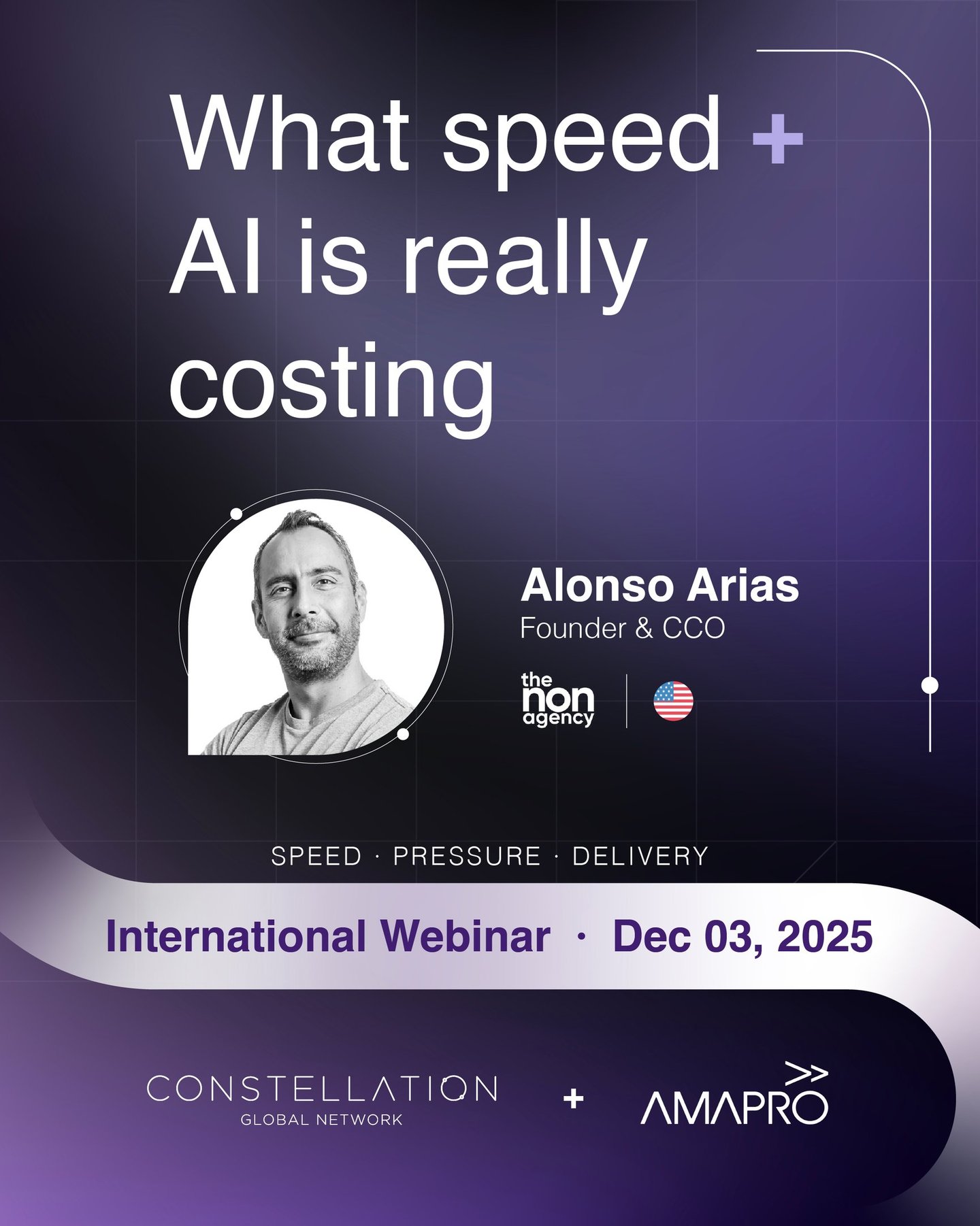
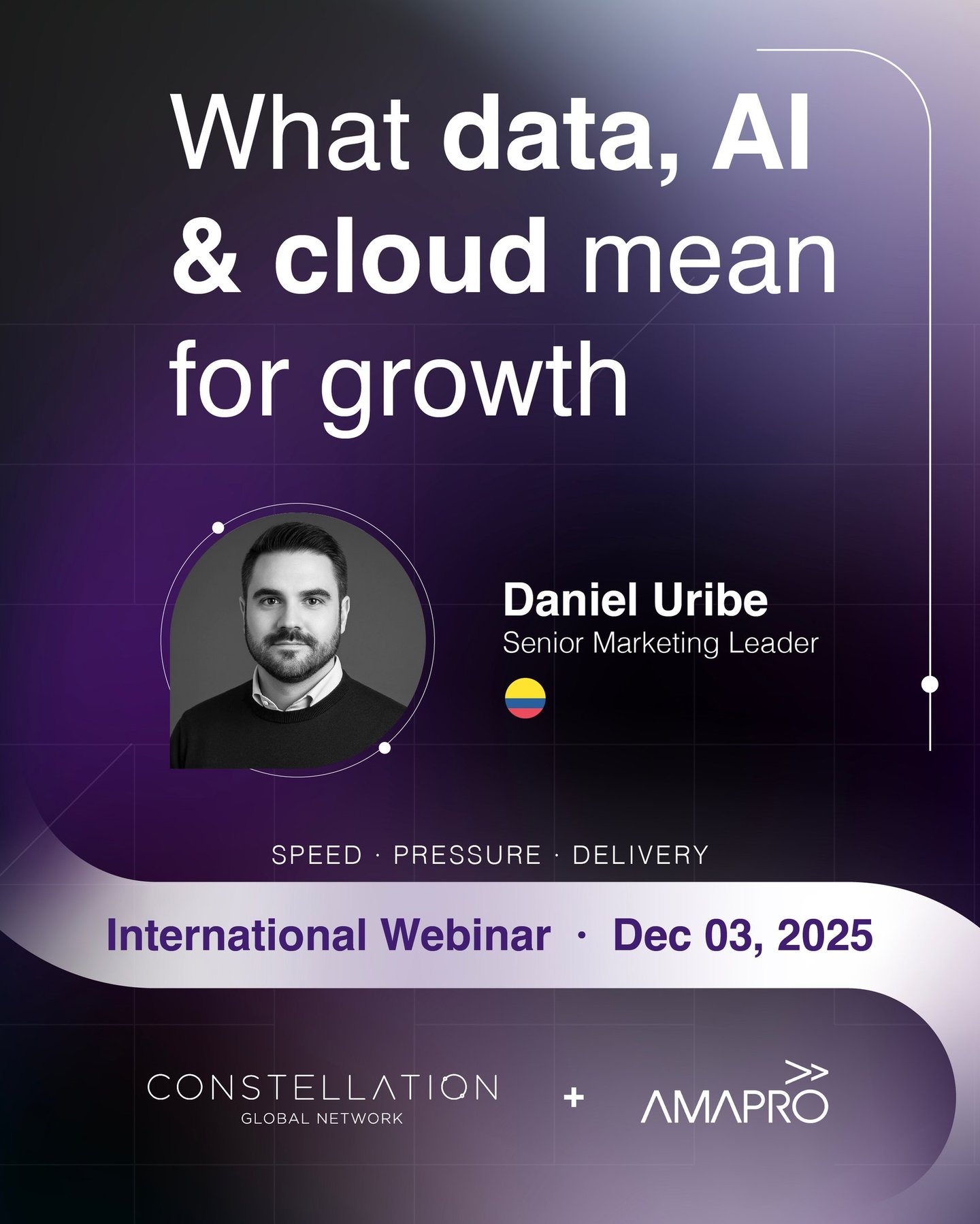
On December 3, 2025, Constellation Global Network and AMAPRO convened agency and brand leaders for a direct conversation on the hidden costs of “urgent mode”—and what a fairer, more sustainable collaboration model must look like next.
12/4/20252 min read
Why This Conversation Was Necessary
Independent agencies are being pushed to deliver faster cycles, more outputs, and “always-on” responsiveness—often without budgets that reflect the true scope of work. At the same time, AI and new market players are reshaping expectations, pricing, and perceived value.
This session was designed to address both realities at once: the current pressure (speed without proportional investment) and the future force (AI-driven acceleration and competition), with a clear objective—to question the model and rebuild a more sustainable way for agencies and brands to work together.
Panelists
Agency representatives
Alonso Arias — Founder & CCO at The Non Agency
Arturo Ortiz — General Director at Birth Group
Brand representative
Daniel Uribe — Field Marketing Leader at Oracle (Colombia)

Moderator
• Camila Farías - CEO Constellation Global Network 
What We Explored: Six Themes Shaping 2026
The Pressure of Speed: Productivity or Talent Exploitation?
When did speed stop being a competitive advantage and become a mandate—and what “invisible costs” appear when urgency becomes the default operating system?
Creativity Under Pressure: The Silent Decline in Quality
How constant pressure affects motivation, retention, and output quality—and whether clients are noticing the decline or normalizing it.
AI + New Players: Competitive Advantage or Real Threat?
Where AI truly helps (and where it increases dependency), what should never be delegated, and who is becoming the real competitor: agencies, platforms, or both.
Adapting Without Losing Your Edge
What structural changes are already happening inside independents, and which capabilities become non-negotiable by 2026.
Procurement vs. Creatives: Two Worlds, Two Metrics
How value gets assessed (and discounted), where misunderstandings originate, and what “minimum rules” should exist to protect outcomes on both sides.
Toward a Fairer Model: Balancing Speed, AI and Value
The practical conditions that prevent burnout, protect talent, and allow AI to create balance—not just acceleration.
Key Takeaways for Leaders
Speed is not free. If timelines compress, something else pays the price: quality, talent health, strategic depth, or all three.
AI changes expectations faster than contracts. If pricing and scope frameworks don’t evolve, agencies get “automated” into devaluation.
Differentiation shifts upward. When output is easier to produce, advantage moves to judgment, systems, and clarity: what to do, why, and what success looks like.
Procurement needs a shared language for value. The model breaks when efficiency becomes the only metric and impact becomes an afterthought.
A fair model is operational, not inspirational. It requires explicit rules: scope, timing, decision cycles, revision limits, and accountability for both sides.
Practical Next Steps We Recommend
For agencies
Build a speed-to-quality framework: what can be fast, what must be protected, and what requires re-scoping.
Define AI boundaries: automate the repeatable, protect the strategic, and document quality control standards.
Turn value into artifacts: clearer KPI frameworks, better post-mortems, sharper reporting—so “impact” isn’t just a promise.
For brands
Align scope, budget, and decision-making speed (fast work needs fast approvals).
Treat AI as a capability shift, not a price-cut lever—otherwise you incentivize lower strategic ambition.
Standardize minimum rules for collaboration: timelines, feedback cycles, and what “done” means.
Why Constellation Hosted This Session
Because the market won’t slow down—and independent agencies shouldn’t have to trade value for survival. This webinar was a step toward putting language, structure, and shared rules around one of the most pressing leadership tensions in our industry today. 
Contact us